
AI in the Fire Service: What's Real, What's Coming, What to Ignore
Honest breakdown of AI in firefighting from a working Captain who also builds AI training tools. What's actually in stations right now, what helps, what's hype, and what to watch out for.
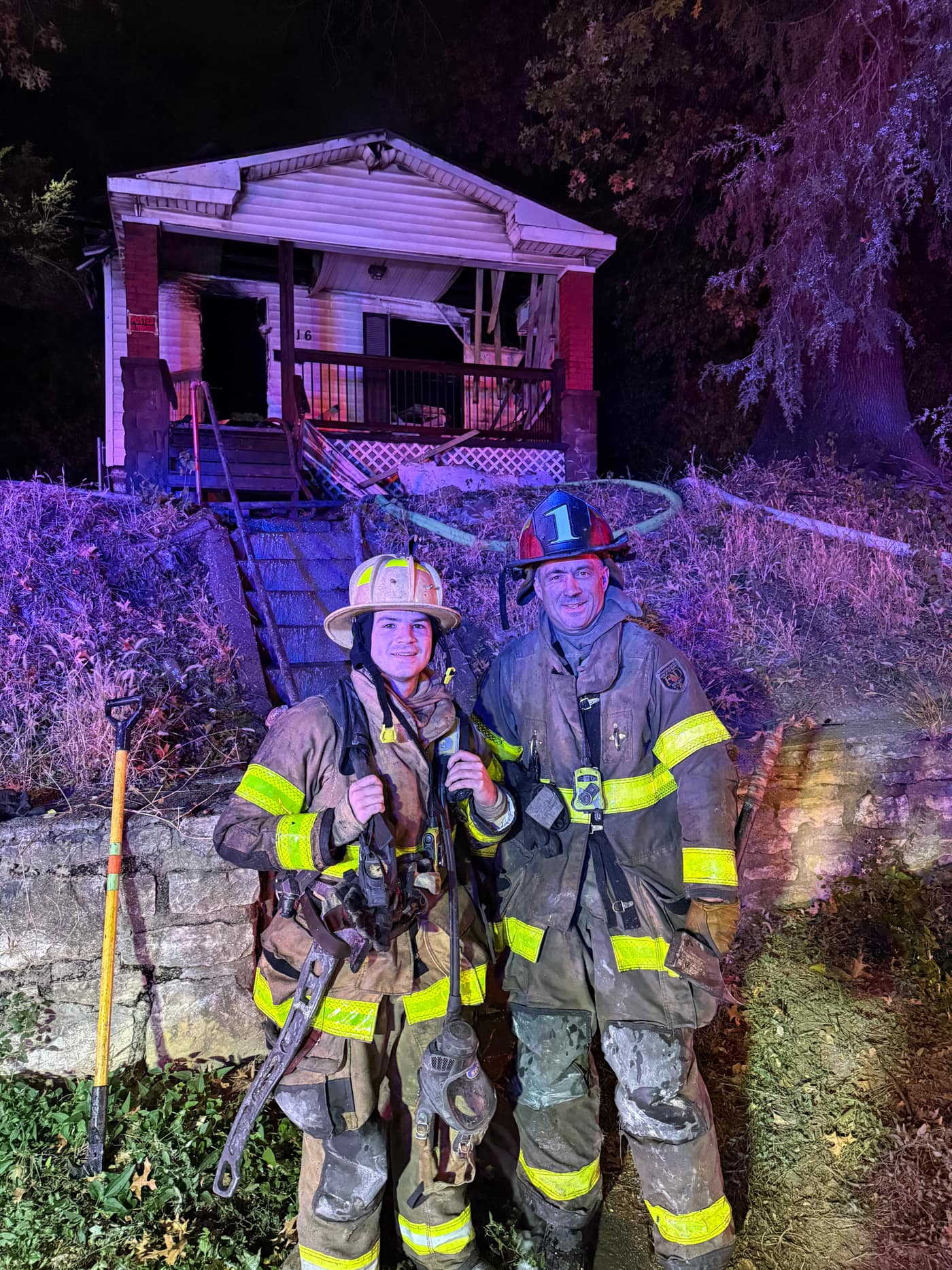
Captain Brian Williams
25-year career firefighter, KCKFD
AI in the Fire Service
Every fire service conference, every trade magazine, every vendor booth is talking about AI right now. Some of it is legitimately useful. Some of it is rebranded software your department has used for a decade. And some of it is going to get somebody hurt if we're not careful. I'm a 25-year career Captain and I also build AI-powered training tools for firefighters. That gives me a foot in both worlds, and I want to walk you through what's actually happening, what works, and what to be skeptical of.
This guide covers the AI tools already running in dispatch centers, on the fireground, and in your EMS rig right now. It also covers the stuff that's coming, the honest limitations, and how to use AI as a working firefighter without becoming dependent on it or compromising your department.
What "AI" Actually Means Here
Before we go further: when fire service vendors say "AI," they mean a lot of different things. Most of it falls into three buckets:
- Machine learning models that predict outcomes from data (call volume forecasting, wildfire spread, CAD dispatch recommendations). These have been around for years under different names.
- Computer vision that interprets images and video (thermal imaging analysis, drone autonomy, smoke detection cameras). Rapidly improving.
- Large language models (ChatGPT, Claude, Gemini). These are the new thing. They read and write text, summarize, draft reports, answer questions. This is what most people mean when they say "AI" in 2026.
When you evaluate a product, figure out which bucket it's in. A lot of "AI-powered" products are really just ML that was already working, with a new marketing label. That's not bad. Just know what you're buying.
Part 1: AI That's Already in Your Station
911 Dispatch and Call Triage
Dispatch is where AI is most mature. Several products sit between the caller and the dispatcher or ride alongside the dispatcher:
- Carbyne c-Live: Live video and location from caller to dispatcher. AI summarizes chaotic calls and flags keywords.
- Prepared Live: Similar video and chat streaming from the caller. AI transcribes and categorizes.
- Corti: Real-time call analysis, especially for cardiac arrest recognition on EMS calls. Used widely in Europe, growing in US.
- RapidSOS Harmony: Connects IoT device data (Apple Watch, vehicle telematics) directly into PSAP workflows.
This is legitimate value. A dispatcher processing 40 calls in a shift benefits from AI-assisted triage and summarization. If your PSAP is looking at these tools, they should evaluate integration with their existing CAD more than the AI claims themselves.
CAD and Predictive Dispatch
Hexagon, CentralSquare, and Tyler Technologies are all piloting or shipping predictive models that forecast call volume, recommend unit assignments, and suggest resource positioning. The math behind this isn't new. Large departments have been running similar models for years through consulting firms. What's new is that it's now packaged inside the CAD you already use.
Wildfire Detection
If you're in a WUI-exposed jurisdiction, these are worth understanding:
- Pano AI: Network of HD cameras with ML that detects smoke plumes within minutes. Deployed in California, Oregon, Colorado, and growing.
- ALERTCalifornia (UCSD): Similar camera network with AI, publicly funded.
- Dryad Networks: Acoustic and gas sensors deployed in forests that detect fires at the smolder stage.
- XyloPlan: Fuel and spread modeling AI for pre-incident planning.
These tools shave minutes or sometimes hours off detection time. In a wind-driven wildland fire, that matters.
Drones and Thermal Imaging
Drone autonomy has jumped in the last two years. The Skydio X10 runs obstacle avoidance and autonomous scene orbits without a pilot babysitting it. DJI Matrice platforms paired with FLIR Boson thermal payloads now do automated hotspot identification on overhaul. BRINC drones are pushing interior reconnaissance for barricaded and structural scenarios. For fire use, the drone-over-structure-fire playbook is maturing fast, and thermal AI that highlights hotspots versus visible fire is genuinely useful.
Body Cams and Report Drafting
Axon's Draft One is a big one. It reads body cam audio and drafts a report narrative. It's marketed heavily to law enforcement and slowly rolling into fire. Motorola's V300 platform has similar roadmap items. The report-drafting use case is where the legal and liability questions get sharp. More on that below.
AI-Assisted After Action Reviews
Truleo started in policing (audio analysis for professionalism flags) and has fire adaptations in the works. Some departments are running their own Claude or GPT workflows to summarize radio traffic, CAD printouts, and incident narratives into AAR drafts. That's the space First Due Co. operates in with our AAR tool: captain-level review, audio plus CAD plus department SOGs, producing a shareable after action review that's actually readable.
Training Simulators
VR platforms like FLAIM Systems and Motorola's VR are using AI for adaptive instructor feedback. Instead of a single scripted scenario, the AI adjusts difficulty based on candidate performance. FLAIM specifically is deployed at several academy programs and produces repeatable fireground decision reps without burning through real-world resources. First Due Co. operates in the same space with voice-based size-up scenarios graded by AI against the same criteria a live instructor would use.
EMS Protocol and Documentation
Pulsara handles the hospital handoff (ETA, vitals, photos to the receiving ED). ESO is shipping AI narrative assist for ePCR documentation. Corti does real-time protocol nudges during active patient encounters. For an EMT or paramedic drowning in documentation, narrative assist is legitimate relief, as long as you verify what it wrote before you sign.
Preplanning
First Due (the occupancy pre-planning platform, different company than First Due Co. despite the name) and APX Data are layering AI on hydrant, occupancy, and building construction data to auto-generate pre-plans. This is promising but depends entirely on the quality of the source data. Garbage in, garbage out still applies.
Part 2: Where AI Genuinely Helps Individual Firefighters
Setting aside the department-level procurement conversations, here's where AI helps you as a firefighter today, right now, for free or close to it.
Studying for Promotion or Certification
This is the biggest use case where AI earns its keep for an individual firefighter. But this is also where generic ChatGPT or Claude falls on its face. Ask a general-purpose LLM about a specific NFPA 1001 chapter and it will confidently cite the wrong section. Ask it for a paramedic dosage and you'll get an answer that sounds authoritative and is wrong by a decimal point. For fire service study, purpose-built platforms beat generic LLMs every time because the content has been verified by firefighters against the actual standards.
That's why we built First Due Co. the way we did. 23,000+ quiz questions tagged to NFPA 1001, NFPA 1021, NREMT, and department SOGs, not scraped from the open internet. An AI oral board coach that throws you tactical and behavioral scenarios and grades your answer against the rubric assessment centers actually use. Voice-graded size-up reps on real fireground images. A daily drill that drops a 5-minute study session into your shift without you having to prompt anything. It's all AI, all fire-service-specific, all reviewed by a working Captain.
If you're prepping for FF1/FF2, a promotional exam, NREMT, or an oral board, start there. Generic ChatGPT is a decent backup for broad study ("explain hydraulics again with different numbers"), but it should never be your primary source for anything exam-critical or protocol-critical. Verify every LLM answer against the actual standard.
Drill Ideas and Lesson Plans
Generic AI can brainstorm drill ideas, but the output quality is inconsistent and the ideas aren't tied to anything measurable. First Due Co. ships a daily fire drill and a daily EMS drill, every day of the year, each one tied to a specific learning objective and tracked against a company's training record for ISO credit. Pre-built, captain-reviewed, and one tap to assign to a shift. For officers who are tired of staring at a blank training calendar, that's the real time-saver.
If you still want to use ChatGPT for one-off brainstorms ("give me drill ideas for hydrant ops on ice"), it works. Just don't expect the output to be polished enough to run in front of a crew without rework.
Report Drafting
NFIRS writing is a chore. AI can turn your rough notes into a coherent narrative. You write "MVC on I-70, two patients, one transported by ambo 14, HazMat for fluid leak, on scene 42 minutes, assigned apparatus E7 L3 M14." The LLM turns that into a proper paragraph. You read it, fix the parts it got wrong, and sign it.
Caution here: never paste patient PHI into a public LLM. ChatGPT and Claude consumer accounts are not HIPAA-compliant by default. Your department needs an enterprise agreement with the vendor or an on-premise solution before PHI touches these systems. More on that in the HIPAA section.
Radio Drill and Size-Up Practice
AI-graded radio and size-up reps are a force multiplier for training. Traditional radio practice requires an instructor sitting across from you evaluating your report in real time. AI scenario tools can present you with an image or video, listen to your voice report, and grade against the COAL WAS WEALTH or similar framework. First Due Co. built this exact workflow because we thought radio reps were the single biggest training gap in most departments.
Company Officer Decision Training
Tactical decision-making under pressure is almost impossible to train in real life without putting people in unsafe situations. AI simulations let you run a basement fire, a high-rise incident, an MCI, over and over, without lighting anything on fire. You won't get the heat or the physical stress. You will get the decision reps. That's worth a lot.
Part 3: Where AI Falls Short (Honest Take)
Fireground Decision-Making
AI cannot replace fireground judgment. Full stop. An LLM has never smelled a structure fire. It has no intuition about when a floor is going to go. It has no feel for a crew's stamina or morale. The data it was trained on doesn't include the subtle cues that separate a veteran firefighter from a probie. Any tool that claims to give you real-time tactical decisions on an active fire should be evaluated with extreme skepticism.
Hallucinations on Critical Information
LLMs make things up. They'll cite an NFPA standard that doesn't exist. They'll tell you a drug dose that's wrong. They'll produce a convincing narrative about a procedure that isn't real. This is called hallucination, and it's not a bug that will be fully fixed anytime soon. On non-critical tasks (drafting a cover letter, generating drill ideas) it's annoying. On critical tasks (medication dosages, tactical decisions) it's dangerous.
The rule: if the stakes are high, verify the output against an authoritative source. Never accept AI-generated protocols, doses, or tactics at face value.
HIPAA and Data Privacy
This is the one that's going to bite departments if they're not careful. Consumer ChatGPT (free or Plus) is NOT HIPAA-compliant. If you paste a patient's PHI into it, you've potentially violated HIPAA and exposed your department to civil penalties. Enterprise OpenAI accounts can be HIPAA-compliant with a Business Associate Agreement (BAA), and same for Claude via Anthropic's enterprise tier. But the default consumer accounts are not.
What does this mean practically? If you're using AI to help with ePCR, your department needs a vetted product with a signed BAA. Not the free account you logged into with your gmail. If your EMS supervisor or chief hasn't addressed this, they need to.
Liability on AI-Drafted Reports
If an AI drafts your NFIRS report and misstates a fact, you signed it, not the AI. Your name is on the document. Discovery motions in litigation are now routinely requesting chat logs and prompts. Judges are still figuring out how to treat AI-generated narratives in evidence. The legal landscape is moving fast and it's not settled.
The safe play: treat AI drafts like a trainee's draft. Read every word. Verify the facts. Make corrections. Sign only when it's accurate. Don't sign blindly.
Deskilling
The real long-term risk isn't AI getting something wrong once. It's firefighters getting dependent on AI and losing the fundamentals. If a probie learns hydraulics by asking ChatGPT instead of running the problem, they won't build the mental model. They'll look brilliant until the day the phone dies or the tool is down and they have no idea why. We saw this happen with GPS and land navigation. It'll happen here too if we're not deliberate about it.
Mitigation: use AI after you've learned the fundamentals, not before. Teach probies hoseline math on paper first, then let them use calculators and LLMs. Same for size-ups. Same for radio traffic.
Part 4: How to Use ChatGPT or Claude on Shift (Without Getting in Trouble)
Heads up before the prompt library: for the fire-service-specific use cases in the list below, a purpose-built platform like First Due Co. gives you more reliable output than generic ChatGPT because the content is tied to real standards and reviewed by working firefighters. If you've got budget for one tool, that's the one. ChatGPT and Claude are still useful for the tasks we don't cover.
What Generic ChatGPT / Claude Works Well For
- Drafting incident narratives from your notes (no PHI)
- Summarizing long SOGs into a quick-reference for a drill
- Proofreading promotional essays and candidate packets
- Writing cover letters, resumes, and application materials
- Explaining general concepts in plain language
- Brainstorming ideas when you need a starting point
What to Use First Due Co. For Instead
- Quiz reps for FF1, FF2, Officer, NREMT, or promotional exams (23,000+ verified questions)
- Oral board practice with a captain-graded AI coach
- Voice-graded size-up reps on real fireground images
- Daily fire and EMS drills tied to NFPA and ISO training credit
- Radio practice with AI scoring against fireground criteria
What to Avoid
- Anything with patient PHI (names, DOBs, addresses, medical history) on a consumer account
- Asking for real-time tactical decisions on an active incident
- Accepting drug doses or protocol specifics without verification
- Uploading department SOGs to a public LLM without checking your department's data policy
- Using AI to generate disciplinary documentation (legal review required)
Prompt Templates That Actually Work
If you still want to use generic ChatGPT or Claude for fire service work, these prompts produce decent output for tasks that don't need verified fire-service content. For oral board reps, quiz banks, and drills, use First Due Co. instead and save yourself the verification work.
For report drafting (no PHI): "Here are my rough notes from an incident. Turn this into a professional NFIRS narrative in past tense, third person. Do not invent any details I didn't include. [Paste notes, no PHI.]"
For SOG summary: "Summarize the attached department SOG into a one-page quick-reference card for a new probie. Bullet points, plain language, highlight anything that's different from the NFPA baseline. [Paste SOG.]"
For cover letters and application materials: "Proofread this firefighter application personal statement for clarity, tone, and grammar. Do not change the voice or add claims I didn't make. [Paste draft.]"
For quiz reps, oral board scenarios, and drills, I'd skip the DIY prompts. You'll spend more time verifying ChatGPT's output than it takes to just run the drill on a platform where the content is already verified.
Part 5: How to Evaluate AI Tools for Your Department
If you're a chief, training officer, or department admin evaluating AI products, here's the checklist I use:
- What category of AI is this? Machine learning, computer vision, LLM, or a mix. Match it to an actual problem you have.
- HIPAA and data handling: If patient data touches it, does the vendor offer a BAA? Where is data stored, who can access it, is it used for training?
- Integration: Does it work with your CAD, RMS, ePCR, station alerting, or does it create a new silo you'll have to manage separately?
- Total cost: License fees, implementation, training, ongoing data costs, and the opportunity cost of staff time spent managing the tool.
- Accuracy and failure mode: What happens when it's wrong? Is there a human in the loop? How is accuracy measured and reported?
- Vendor track record: Who else has deployed this? Call two similar-sized departments and ask them the truth.
- Exit plan: If the vendor goes out of business or you drop the product, how do you get your data out?
Small departments especially should not be the first adopters of unproven AI products. Let the big metros work out the bugs on their budget.
Part 6: What's Coming in the Next Five Years
Everything above is what's shipping or near-shipping in 2026. Here's what's on the horizon:
- Multimodal AI size-up: First-arriving apparatus streams video to a model that generates an initial size-up report, flags hazards, and suggests tactics for the officer to verify.
- Voice-native radio tools: Live radio traffic automatically parsed, transcribed, tagged, and searchable. Say "repeat the last PAR" and the system plays it back.
- Predictive deployment: Unit placement models that adjust in real time based on weather, events, and traffic. Already happening at major metros, coming to mid-sized departments next.
- AI-generated pre-plans: Walk a new occupancy with a phone, AI drafts the pre-plan including construction, hydrants, hazards, and egress. Human review and sign-off still required.
- Integrated wellness monitoring: Wearables feed physiological data to AI that flags individual firefighters at risk during prolonged events. Technology exists, adoption is the bottleneck.
Some of this will arrive. Some won't. None of it replaces the basic job: get the truck there, find the fire, put it out, bring everyone home.
The Bottom Line
AI in the fire service isn't going away, and it shouldn't. Used correctly, it takes the administrative grind off your plate so you can focus on the job. Used carelessly, it creates new liability exposure and erodes fundamental skills. The working captains and chiefs I trust most are the ones who are experimenting with it, staying skeptical, and refusing to let it replace judgment built from experience.
At First Due Co., we use AI every day to train firefighters. Voice-graded size-ups, adaptive quiz engines, daily drills, and an AAR tool that turns a captain's audio notes and CAD printouts into a shareable review. None of that replaces the fire academy, the instructor, or 20 years of truck work. It just gives individual firefighters more reps, faster, without needing a full training cadre to do it. That's the right use of AI in our world: force multiplier for training, not substitute for judgment.
Stay curious, stay skeptical, and remember that the fireground doesn't care what algorithm you used to plan for it.
Got Questions or Want to Talk Shop?
If you have questions about AI in your department, want to push back on anything here, or have a use case you want me to evaluate, reach out directly: brian@firstdueco.com. I read every message, and I'm always interested in what's working and what isn't out on the job.
Try First Due Co.
Practice voice-graded size-ups, radio drills, and oral board reps. Built by a Captain, graded by AI against real fireground criteria. Three-day free trial.
Try It FreeAbout the Author
Captain Brian Williams
Brian Williams is a 25-year career firefighter and Captain with the Kansas City Kansas Fire Department. He holds Firefighter I/II, Technical Rescue, and USAR certifications, and is the founder of First Due Co. Every guide here is reviewed for accuracy against the national standards and tactics used on the job.
More about BrianFrequently Asked Questions
Will AI replace firefighters?
No. AI is replacing administrative tasks (report drafting, call triage summaries, pre-plan generation) and is a force multiplier for training. It is not replacing the physical job of firefighting, rescue, or EMS patient care. The job requires human judgment, physical capability, and on-scene presence that AI cannot provide.
Is it safe to use ChatGPT or Claude for fire service work?
Yes for non-sensitive tasks (study prep, drill ideas, drafting narratives from your notes). No for anything containing patient PHI on a consumer account, since that would violate HIPAA. For PHI-adjacent work, your department needs an enterprise account with a signed Business Associate Agreement. Always verify critical information (dosages, protocols, tactics) against authoritative sources.
Is using AI for NFIRS reports HIPAA-compliant?
Only if your department has an enterprise agreement with the AI vendor that includes a signed Business Associate Agreement. A free or consumer ChatGPT account is not HIPAA-compliant. If patient data would be part of the report, clear AI use with your HIPAA compliance officer or legal counsel before implementation.
What AI tool should a small fire department start with?
Start free. Use ChatGPT or Claude on a free or low-cost tier for individual study, drill generation, and report drafting practice. Do not commit department budget to expensive AI platforms until you have specific operational problems that a proven tool solves. Let larger metros pilot unproven products first.
What happens if an AI-generated report contains errors and someone gets sued?
The firefighter or officer who signed the report is responsible for its content. AI does not carry liability. Treat AI-generated drafts like a trainee's draft: read every word, verify facts, correct errors, and only sign when accurate. Discovery in litigation now routinely requests AI chat logs, so assume your prompts and outputs may be subpoenaed.
Which departments are using AI the most?
Major metro departments (FDNY, LAFD, Chicago, Miami-Dade) have the most mature AI deployments, primarily in dispatch and predictive analytics. Wildfire-exposed agencies lead on detection AI (Pano AI, ALERTCalifornia). EMS-heavy departments are piloting narrative assist in ePCR. Training adoption via platforms like First Due Co. and FLAIM VR is growing across department sizes.
Can AI help me prepare for a promotion exam?
Yes, and this is one of the best current uses. Feed your study materials into ChatGPT or Claude and have it quiz you, explain concepts in different ways, and roleplay oral board scenarios. Verify its answers against NFPA standards and your department SOGs before trusting them. AI is a study partner, not the source of truth.
Related Guides
How to Give a Size-Up Report: Format, Examples, and Practice
Firefighter Oral Board Guide: How to Ace the Interview
NREMT Exam Study Guide
Company Drill Ideas for Fire Departments
Fire Officer Promotional Exam Guide: Study Strategies & Assessment Centers
From the Blog
Ready to Train?
Guides give you knowledge. Our platform gives you reps. Voice size-ups, AI-graded radio drills, 23,000+ exam questions, and daily company drills.
Start Training Free3-day free trial. $7.99/mo. Built by a Captain.